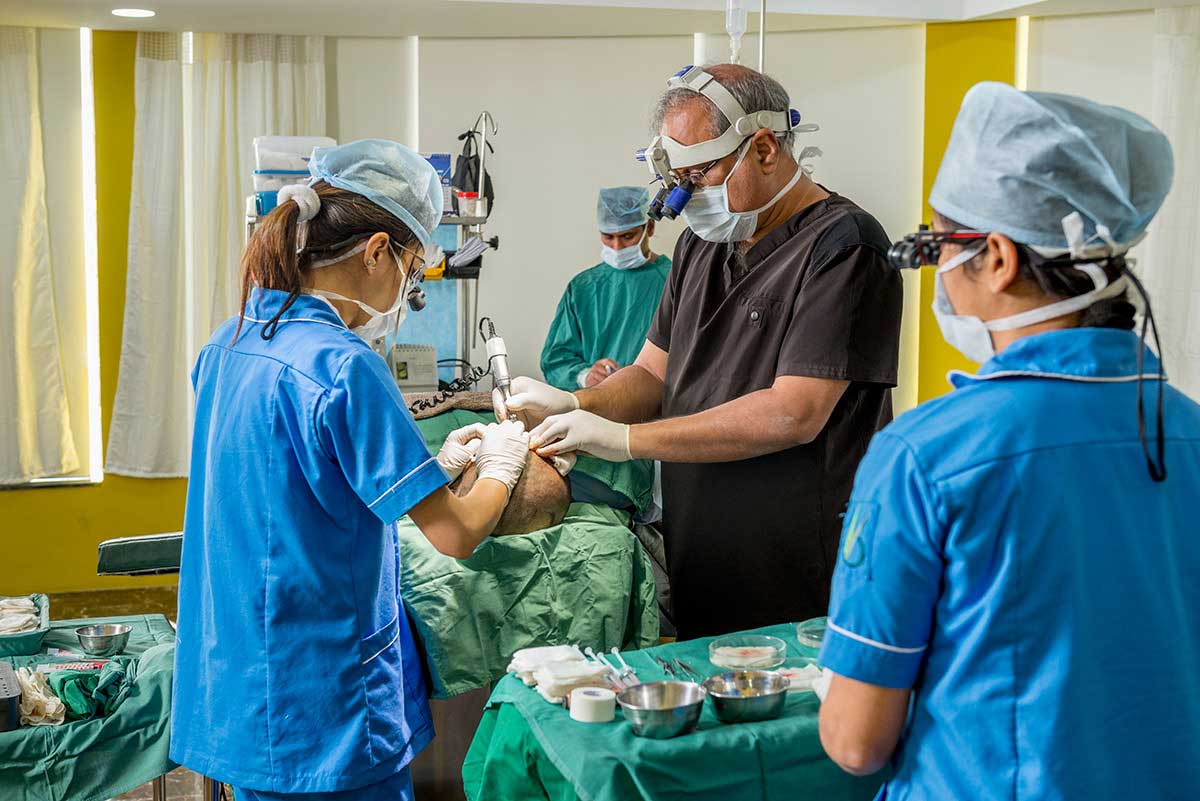

Is a cure for baldness finally within reach, or are we simply watching a new generation of sophisticated promises?
Imagine a man with advanced baldness giving a tiny scalp sample and returning weeks later to receive thousands of new follicles grown from his own cells. No donor depletion, and perhaps no lifelong medication. Science fiction? Not entirely. Scientists are already growing experimental hair follicle structures in laboratories and testing drugs that may reactivate dormant follicles.
As 2026 draws to a close, here are 15 developments in hair loss treatment for 2027 that deserve your attention. Some have produced encouraging results in human trials. Others remain in the laboratory. A few are being sold to patients long before the science has caught up. After more than two decades as a hair transplant surgeon, I have learned that this industry never lacks promises. It often lacks evidence. So I will explain the biology, review the progress and tell you honestly what could change clinical practice.
- No proven cure exists yet. Expect better drugs and better evidence in 2027, not routine hair cloning.
- Clascoterone is the nearest new medical option for male pattern baldness, but it is not a cure.
- PP405 aims to wake dormant follicles and is the most intriguing new mechanism, but it is still investigational.
- Hair follicle cloning could end the donor-supply limit in hair transplants, but it is not a 2027 service.
- Exosome injections and expensive laser devices have outpaced their evidence.
Male Pattern Baldness vs Alopecia Areata
One distinction matters before we begin. Male pattern baldness (androgenetic alopecia) is genetically susceptible follicles shrinking under androgens such as DHT. Alopecia areata is a different, largely autoimmune disease. A treatment that works spectacularly for one can be useless for the other.
15 Hair Loss Treatments to Watch in 2027
1. Clascoterone: Blocking DHT Locally
Finasteride reduces the production of DHT. Clascoterone is a topical anti-androgen that stops DHT acting on the androgen receptor at the follicle, like preventing a key from turning in a lock. Local blocking could reduce systemic hormone exposure, though that is not guaranteed. A Phase III programme in more than 1,400 men reported encouraging hair-count and safety results, but these are company-reported, and the approved acne formulation is not the same as the stronger scalp solution.
My verdict: a valuable potential addition for patients who prefer a locally acting treatment. It is not a cure, and I want head-to-head comparisons with finasteride before calling it superior.
2. GT20029: Destroying the Androgen Receptor
GT20029 is a PROTAC, a molecule that recruits the cell’s own disposal machinery to degrade the androgen receptor itself. A Phase II study reported about 16.8 extra hairs per square centimetre after twelve weeks, roughly 6.7 more than placebo. Cells can make new receptors, so lasting benefit is unproven.
My verdict: interesting, but not complete restoration. It shows that treatment may soon target androgen signalling at several levels.
3. PP405: Awakening Dormant Follicles
Stem cells often survive in balding scalp but fail to start productive growth. PP405 aims to adjust follicle stem-cell metabolism so they re-enter a growth phase, rather than simply blocking DHT. In October 2026, Pelage Pharmaceuticals announced its Phase II/III AWAKEN trial in androgenetic alopecia.
A sleeping follicle can potentially be awakened. A follicle that no longer exists must be replaced.
My verdict: unproven in advanced baldness, and the drug I will watch most closely in 2027.
4. Hair Follicle Cloning: The Transplant Game-Changer
Every transplant is limited by a finite donor supply. A patient may need ten thousand grafts but have only five or six thousand available in a lifetime. Transplantation redistributes follicles. It does not create them.
If a few donor cells could be multiplied in the laboratory into functional follicles, the arithmetic would change completely. The obstacle is that a follicle is a miniature organ, with epithelial and dermal papilla cells, nerves, blood supply and precise signalling. It must grow the right hair, cycle repeatedly and ideally keep donor-hair resistance to balding. A 2026 review noted progress in laboratory models alongside major obstacles to mature human follicles.
My verdict: the most fundamental potential breakthrough on this list, but not a clinical service in 2027. The laboratory has opened the door. Clinical transplantation has not yet walked through it.
5. 3D Bioprinting of Hair Follicles
Bioprinting places living cells in a scaffold to build tissue. Making something that looks like a follicle is easy. Making one that grows a durable hair and cycles is not. Anyone selling printed follicles in 2027 is ahead of the science.
My verdict: bioprinting will help with laboratory research, drug testing and eventually tissue engineering. Cloning and bioprinting are exciting, but they are no reason for a young man with progressive hair loss to abandon proven treatment while waiting for tomorrow’s miracle.
6. Stem Cells and Exosomes: Medicine or Marketing?
Exosomes are tiny vesicles that carry growth signals between cells, and early studies hint at benefit. But a 2026 systematic review found small trials, inconsistent protocols and weak controls. There is no standard product, and biological origin does not guarantee purity or safety. No exosome product has FDA approval for hair loss.
My verdict: promising research, not an established treatment. I am sceptical of expensive exosome injections sold as one.
7. JAK Inhibitors: Breakthrough for Alopecia Areata
Baricitinib, ritlecitinib and deuruxolitinib are FDA-approved for specified severe alopecia areata. They calm the immune attack on follicles, but need careful selection, supervision and monitoring because of serious risks, and hair loss can return after stopping.
My verdict: a genuine advance for the right disease. They are not established treatments for ordinary male pattern baldness.
8. Wnt Signalling
The Wnt/beta-catenin pathway helps start follicle growth cycles, so activating it is tempting. But the same pathways can drive unwanted cell growth, so safety is the question. An effective treatment must act in the right tissue, at the right concentration, for the right duration. Wnt modulation is not yet a validated cure for androgenetic alopecia, and I expect it to work best as one component of future regenerative treatments, perhaps helping to grow follicles in the laboratory or reactivate surviving miniaturised ones.
9. Prolactin Receptor Inhibition
Investigational agents such as HMI-115 and ABS-201 block the prolactin receptor, a mechanism distinct from DHT suppression. We still need evidence on regrowth size, durability and safety. It is one to watch, and the future may involve different drug combinations for different patients.
10. Artificial Intelligence in Hair Restoration
AI could standardise measurement, predict how hair loss may progress and model future graft needs for a 23-year-old asking for a low hairline. But predictions depend on training data, and hair loss is a dynamic process. A beautifully calculated mistake remains a mistake. AI will assist the surgeon, not replace their judgement.
11. Personalised Medicine for Hair Loss
Researchers are studying genetics and biomarkers that might predict who responds to which drug. Imagine knowing before you start whether you will respond to an androgen receptor antagonist, a follicle activator or a combination, and avoiding months of trial and error. But genetic risk is not a validated treatment-selection test, and no comprehensive test exists yet. For now, personalised treatment means understanding the patient’s age, pattern of loss, donor area, family history, expectations and willingness to stay on medication.
12. Platelet-Rich Plasma (PRP)
PRP contains real growth factors, but preparations vary widely in platelet concentration, activation, injection depth and schedule. A 2025 meta-analysis of 43 randomised trials (1,877 participants) supported improved density while noting heavy variation. I use PRP as a surgical adjunct, but there is not enough evidence that it alone controls progressive baldness. Regenerative medicine cannot rest on a recipe that changes from one kitchen to another.
13. Scalp Microbiome
Links between scalp microbes and inflammation are a legitimate research question, but association is not causation. Probiotic shampoos and microbiome tests are not established treatments. Even the healthiest scalp cannot grow a follicle that no longer exists.
14. Laser and Light Therapy
Low-level light therapy may offer modest benefit in selected patients, but a new wavelength or helmet shape does not make a new category of treatment. I would never advise abandoning proven medication for an expensive laser device.
15. Epigenetics and the Follicle Microenvironment
Scientists are exploring how gene-expression controls and the matrix around the follicle affect regeneration, including small-RNA approaches to the androgen receptor. This is complex, long-term science, and not something to expect in routine care in 2027.
Will a Cure Make Hair Transplants Obsolete? Should You Wait?
I advise against delaying treatment on the assumption that a breakthrough is imminent. Hair cloning predictions have been overly optimistic for decades, while androgenetic alopecia keeps progressing.
Remember too that a transplant is not a cure. It redistributes existing follicles, and native hair around them may keep thinning, which is why patients sometimes return years later with new thinning behind the transplanted hairline.
One factor deserves attention: the time each graft spends outside the body, where oxygen and temperature changes can stress its cells. This principle underlies my Direct Hair Extraction (DHX) approach, which coordinates extraction, graft preparation and implantation to limit that time. It is a plausible biological advantage, not a universally proven outcome. The best transplant is not the one that moves the most grafts. It is the one that uses a finite donor supply most intelligently.
My Predictions for 2027
- Near-term relevance: clascoterone, refined JAK inhibitor use for alopecia areata, better treatment protocols.
- Promising but investigational: PP405, GT20029, prolactin receptor inhibitors.
- Longer-term: follicle multiplication, organoids, 3D bioprinting, cellular reprogramming.
My top three are clascoterone, PP405 and hair follicle multiplication. The first two may help us preserve and reactivate existing follicles. The third may one day let us create new ones.
Will 2027 Bring a Cure for Baldness?
The coming year will more likely bring better evidence and drug-development milestones than a cure. My advice is unchanged: preserve the hair you have, get an accurate diagnosis, use treatments backed by credible evidence, and manage donor hair as a limited resource. Do not pay for treatments whose claims have outpaced their evidence, and remember that hair loss can affect confidence and well-being. Some patients with mild loss are deeply distressed, while others with extensive baldness are entirely comfortable, and both reactions are legitimate. A young man with early recession does not automatically need a transplant. He may need an accurate diagnosis and realistic expectations. Sometimes the best treatment is surgery, sometimes medication, and sometimes the most ethical advice is neither.
I remain optimistic, but optimism must stay anchored to evidence. Until science bridges the distance between growing a few hairs in a laboratory and restoring a whole scalp, the greatest breakthrough may still be the wisdom to protect the follicles we already have.
Want an honest, evidence-based assessment of your hair loss, your donor area and your options?
Book a Hair Loss Consultation
FAQ: Cure for Baldness and New Hair Loss Treatments
Is there a cure for baldness in 2027?
No proven cure is expected. Realistic advances are new drugs in trials, better evidence and more precise treatment selection.
Is clascoterone better than finasteride?
Not yet known. Clascoterone blocks the receptor locally, finasteride reduces DHT, and robust comparisons are still needed.
Will hair cloning be available in 2027?
Unlikely. Laboratory progress is real, but reliable, mature human follicles for transplantation have not been achieved clinically.
Do exosome injections work for hair loss?
Early studies are small and inconsistent, and there is no standardised product. No exosome product has FDA approval for hair loss, so I regard it as research, not routine care.
Can JAK inhibitors treat male pattern baldness?
No. They are approved for severe alopecia areata, an autoimmune condition, not for androgenetic alopecia.
Should I wait for a cure before a hair transplant?
I advise against waiting. Hair loss progresses meanwhile, so combine medical preservation with a transplant plan that protects your donor supply.