
The cost of a hair transplant in India is often quoted per graft. You may see prices of INR 30, INR 40, INR 70 or INR 120 per graft and reasonably wonder: if every clinic is moving hair from one part of the scalp to another, why is there such a difference?
The graft is only one part of what you are buying. The surgical plan, the surgeon’s involvement, donor preservation and care after the procedure also matter. A lower price can represent good value, but the per-graft figure alone cannot tell you whether a transplant is well planned.
How is hair transplant cost calculated in India?
Clinics, as per industry norms, calculate the surgical fee by multiplying the number of grafts by a quoted rate:
| Number of Grafts | At INR 30 per graft | At INR 120 per graft |
|---|---|---|
| 1,500 | INR 45,000 | INR 1,80,000 |
| 2,500 | INR 75,000 | INR 3,00,000 |
| 3,500 | INR 1,05,000 | INR 4,20,000 |
(1 USD= ₹95)
These are illustrations, not treatment estimates. The optimal number of grafts for your level of baldness and head size depends on your hair loss pattern, donor supply, age, hair characteristics, likely future progression & of course what you wish to achieve from the hair transplant procedure- your objectives.
Ask each clinic for a written quotation specifying what the fee includes.

Why can a cheaper hair transplant become expensive?
Many patients come to me for revision after an earlier transplant priced at approximately INR 30 per graft from all over India. Usually their donor areas have been overharvested, grafts poorly distributed, and transplanted hairs sit at unnatural, unimaginable angles. All this when the baldness is progressing every single year and there is not donor left!
Sometimes repair is possible to consider, but more often than not, depleted donor supply restricts options. That is the cost that nobody has even thought of. A surgical fee can be paid again; harvested donor follicles cannot simply be replaced.
This does not mean every inexpensive hair transplant produces a poor result, or that a high price guarantees a good one. It means the initial quotation should be judged alongside the long-term surgical plan.
The International Society of Hair Restoration Surgery identifies donor overharvesting and poor hairline design as risks and notes that revision may require further donor hair.
What affects the price of a hair transplant?
The graft count matters, but it is not the whole calculation. Before accepting a quotation, establish:
- Who will perform each surgical step? Ask who designs the hairline, gives anaesthesia, harvests grafts, creates recipient sites and places the grafts.
- How will the donor be protected? The plan should account for hair you may need in later years.
- How is the hairline designed? Naturalness depends on its position, irregularity, transition zone, graft selection and hair direction.
- How many patients are treated that day? This helps you understand how the surgeon’s time is allocated.
- What happens after surgery? Ask about follow-up, progressive hair loss and access to the treating doctor.
A low quote may suit a patient’s budget. The essential question is what that quote covers and who remains responsible for the result.
What is the cost of DHX hair transplant in India?
At Darling Buds Clinic, the DHX hair transplant cost in India is approximately INR 120 per graft. The final quotation depends on an individual assessment and the proposed graft count.
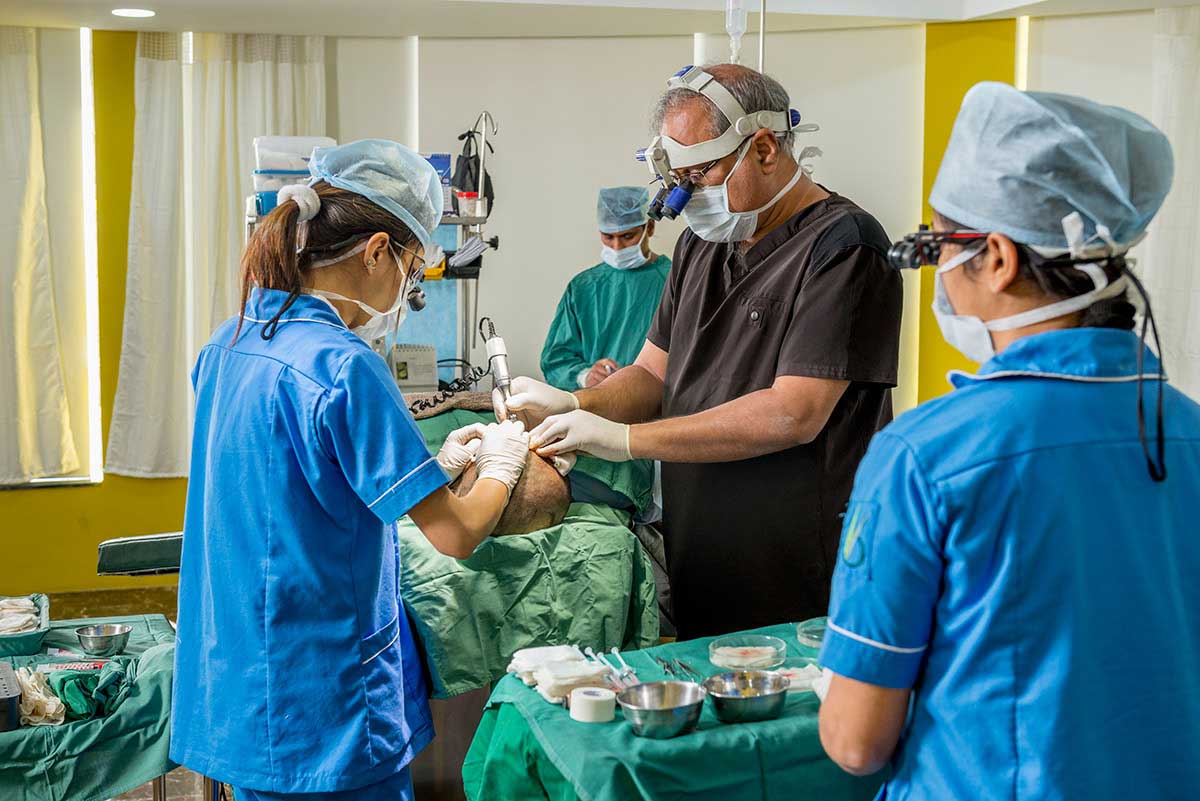
DHX describes my approach to surgeon involvement; it is not a special graft or an implanter pen. I assess the patient, design the hairline, administer anaesthesia, harvest the grafts and create the recipient sites that determine their direction, angle and distribution. Implantation follows that plan under my supervision.
I perform one hair transplant a day because these decisions require my time. We also have a more economical option through 5 Rivers for patients who need a different price point. Whichever option you consider, I would ask for clarity about the surgeon’s role and the care included.
Why does donor preservation matter so much?
Hair loss may progress after transplantation. A person seeking treatment for frontal recession at 25 may need further coverage years later. Using too much donor hair for density today can leave fewer options tomorrow. And if you cannot ensure the whole head remains covered as baldness progresses, what is the need of a hair transplant in the first place!
For that reason, I do not assess a transplant solely by its appearance at eight months. I want to know whether the hairline still looks appropriate as the patient ages, whether the donor remains healthy and whether future hair loss was anticipated. Medicines and follow-up may also be part of managing the native hair that was never transplanted.
The practical answer: when comparing the cost of hair transplant in India, compare the proposed graft count, the surgeon’s actual involvement, the donor plan and the follow-up in writing.
Price matters. So does the supply of hair you have for the rest of your life.